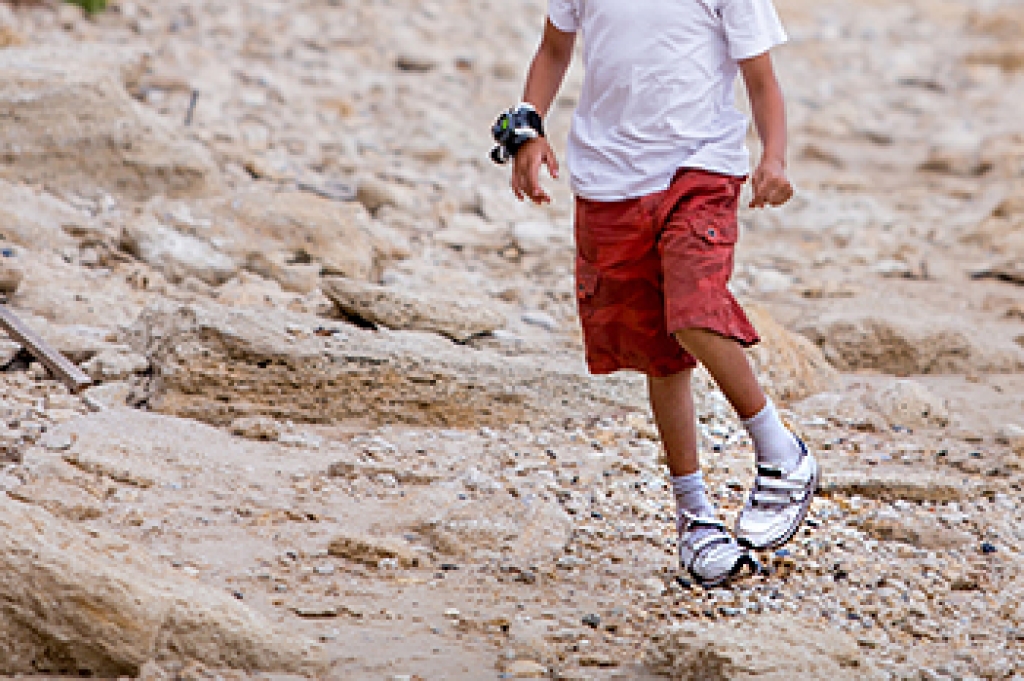
Choosing the Right Shoes for Toddlers

It is essential for young children to be barefoot when they first learn to walk, in order to allow their muscles to develop properly. The bones in a baby’s foot aren’t fully developed until they are around 5 years old, and tend to be very soft up until that point. To ensure toddler shoes fit properly and support healthy foot development, check length, width, flexibility, and heel grip. There should be about a thumb’s width of space at the front for growth, and the sides should fit snugly without pinching while allowing toe movement. Choose shoes with soft, flexible soles that bend easily to encourage natural movement. Lastly, make sure the heel fits securely without slipping or feeling overly tight, which helps prevent blisters and provides stability. If your child is just learning to walk, it is suggested that you make an appointment with a podiatrist for guidance on proper footwear.

Making sure that your children maintain good foot health is very important as they grow. If you have any questions, contact one of our podiatrists of Foot Doctors of Utica. Our doctors can provide the care you need to keep you pain-free and on your feet.

Keeping Children's Feet Healthy

Having healthy feet during childhood can help prevent medical problems later in life, namely in the back and legs. As children grow, their feet require different types of care. Here are some things to consider...

Although babies do not walk yet, it is still very important to take care of their feet.

Avoid putting tight shoes or socks on his or her feet.

Allow the baby to stretch and kick his or her feet to feel comfortable.

As a toddler, kids are now on the move and begin to develop differently. At this age, toddlers are getting a feel for walking, so don’t be alarmed if your toddler is unsteady or ‘walks funny’. 

As your child gets older, it is important to teach them how to take care of their feet.

Show them proper hygiene to prevent infections such as fungus.

Be watchful for any pain or injury.

Have all injuries checked by a doctor as soon as possible.

Comfortable, protective shoes should always be worn, especially at play.

If you have any questions, please feel free to contact our offices located in Herkimer, and New Hartford, NY . We offer the newest diagnostic and treatment technologies for all your foot care needs.

Read more about What to Do to Keep Your Child’s Feet Healthy

Types of Wound Care for Foot Ulcers

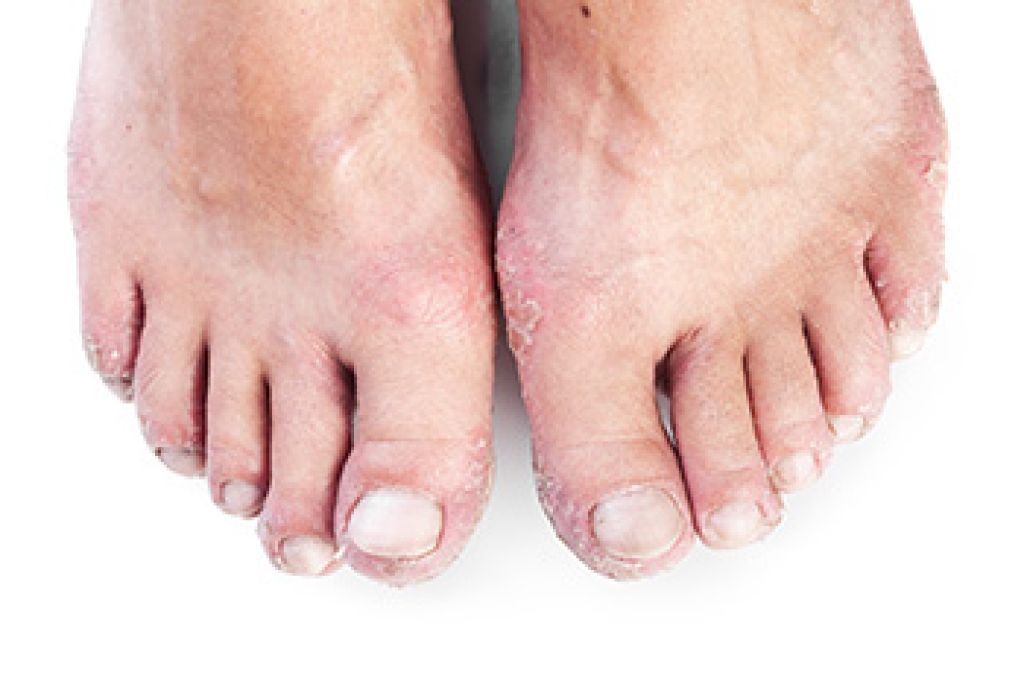
Foot ulcers require specialized care to remove dead tissue and promote healthy healing. Different types of wound care are used depending on the severity and condition of the ulcer. Sharp debridement uses sterile instruments to remove damaged tissue quickly and precisely. Autolytic and enzymatic methods rely on moisture or natural enzymes to help the body clear away unhealthy tissue more gradually. Mechanical debridement, which uses gentle cleansing or dressing changes, can aid in removing debris, though it must be performed carefully to protect healthy skin. For deeper or infected ulcers, hydrosurgical techniques may be used to target damaged tissue with pressurized saline for improved precision. A podiatrist can evaluate the ulcer, determine which type of wound care is most effective, and monitor healing progress. If you have a foot ulcer that will not heal, it is suggested that you make an appointment with a podiatrist for a diagnosis and treatment.

Wound care is an important part in dealing with diabetes. If you have diabetes and a foot wound or would like more information about wound care for diabetics, consult with one of our podiatrists from Foot Doctors of Utica. Our doctors will assess your condition and provide you with quality foot and ankle treatment.

What Is Wound Care?

Wound care is the practice of taking proper care of a wound. This can range from the smallest to the largest of wounds. While everyone can benefit from proper wound care, it is much more important for diabetics. Diabetics often suffer from poor blood circulation which causes wounds to heal much slower than they would in a non-diabetic. 

What Is the Importance of Wound Care?

While it may not seem apparent with small ulcers on the foot, for diabetics, any size ulcer can become infected. Diabetics often also suffer from neuropathy, or nerve loss. This means they might not even feel when they have an ulcer on their foot. If the wound becomes severely infected, amputation may be necessary. Therefore, it is of the upmost importance to properly care for any and all foot wounds.

How to Care for Wounds

The best way to care for foot wounds is to prevent them. For diabetics, this means daily inspections of the feet for any signs of abnormalities or ulcers. It is also recommended to see a podiatrist several times a year for a foot inspection. If you do have an ulcer, run the wound under water to clear dirt from the wound; then apply antibiotic ointment to the wound and cover with a bandage. Bandages should be changed daily and keeping pressure off the wound is smart. It is advised to see a podiatrist, who can keep an eye on it.

If you have any questions please contact our offices located in Herkimer, and New Hartford, NY . We offer the newest diagnostic and treatment technologies for all your foot and ankle needs.

Read more about Wound Care

Understanding Plantar Fasciitis

Plantar fasciitis is a foot condition that affects many middle-aged women due to hormonal changes, reduced elasticity in connective tissues, increased activity levels, and footwear that does not offer adequate support. Symptoms often include sharp heel pain when taking the first steps in the morning, tenderness along the bottom of the foot, and stiffness that may worsen after long periods of standing. The condition may appear as mild swelling near the heel and feel like a persistent ache or a sudden stabbing sensation. Causes include overuse, improper shoe choices, weight gain, or biomechanical issues, such as flat feet or high arches. A podiatrist can provide an early and accurate diagnosis through physical examination and imaging, followed by treatments that include custom orthotics, stretching plans, footwear guidance, and advanced procedures when necessary. If you are dealing with this type of heel pain, it is suggested that you make an appointment with a podiatrist.

Many people suffer from bouts of heel pain. For more information, contact one of our podiatrists of Foot Doctors of Utica. Our doctors can provide the care you need to keep you pain-free and on your feet.

Causes of Heel Pain

Heel pain is often associated with plantar fasciitis. The plantar fascia is a band of tissues that extends along the bottom of the foot. A rip or tear in this ligament can cause inflammation of the tissue.

Achilles tendonitis is another cause of heel pain. Inflammation of the Achilles tendon will cause pain from fractures and muscle tearing. Lack of flexibility is also another symptom.

Heel spurs are another cause of pain. When the tissues of the plantar fascia undergo a great deal of stress, it can lead to ligament separation from the heel bone, causing heel spurs.

Why Might Heel Pain Occur?

  • Wearing ill-fitting shoes                
  • Wearing non-supportive shoes
  • Weight change           
  • Excessive running

Treatments

Heel pain should be treated as soon as possible for immediate results. Keeping your feet in a stress-free environment will help. If you suffer from Achilles tendonitis or plantar fasciitis, applying ice will reduce the swelling. Stretching before an exercise like running will help the muscles. Using all these tips will help make heel pain a condition of the past.

If you have any questions, please feel free to contact our offices located in Herkimer, and New Hartford, NY . We offer the newest diagnostic and treatment technologies for all your foot care needs.

Read more about Heel Pain

Mid-Foot Stress Fractures in Runners

Mid-foot stress fractures in runners often involve the navicular bone, which lies between the ankle and the front of the foot. Repetitive impact from running can place excessive pressure on this bone. This often happens during foot strike, when the navicular becomes trapped between the talus and the cuneiform bones. The resulting pressure can eventually cause a small crack to form, which leads to pain on the top or inner side of the mid-foot. Because these mid-foot stress fractures are difficult to detect on standard X-rays, advanced imaging, such as a CT scan or MRI, is often needed to confirm the diagnosis. Without proper care, the fracture can become worse or heal improperly, resulting in long-term pain or weakness. A podiatrist can assess the injury, ensure accurate imaging, and recommend appropriate treatment or surgery if needed. If you have mid-foot pain while running, it is suggested that you make an appointment with a podiatrist for a diagnosis and suggested treatment.

Activities where too much pressure is put on the feet can cause stress fractures. To learn more, contact one of our podiatrists from Foot Doctors of Utica. Our doctors can provide the care you need to keep your pain free and on your feet.

Dealing with Stress Fractures of the Foot and Ankle

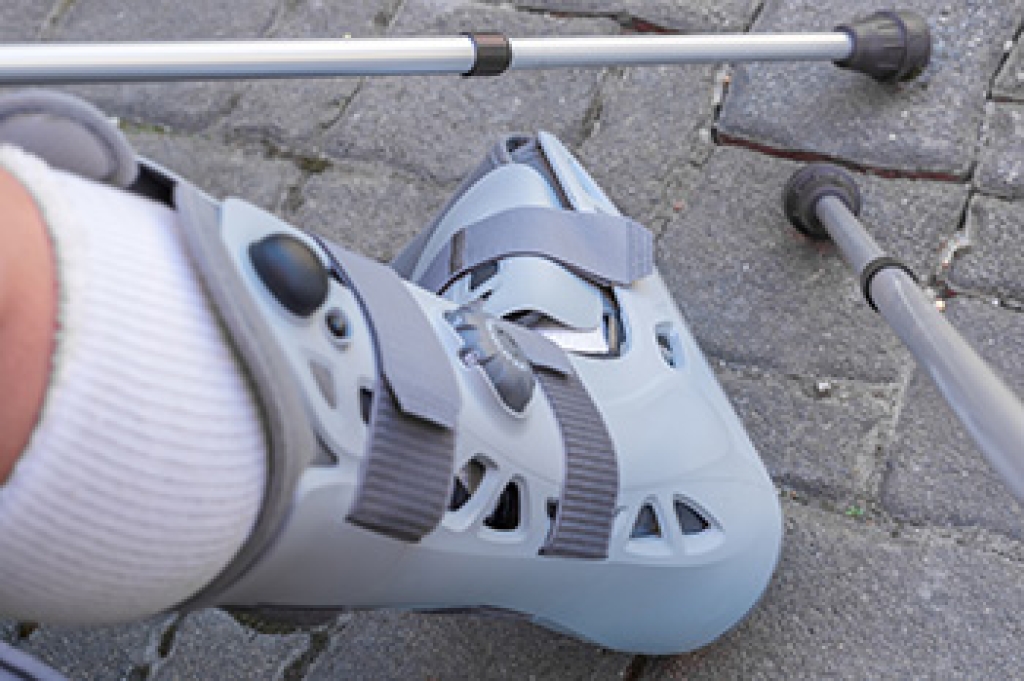
Stress fractures occur in the foot and ankle when muscles in these areas weaken from too much or too little use.  The feet and ankles then lose support when walking or running from the impact of the ground. Since there is no protection, the bones receive the full impact of each step. Stress on the feet can cause cracks to form in the bones, thus creating stress fractures.

What Are Stress Fractures?

Stress fractures occur frequently in individuals whose daily activities cause great impact on the feet and ankles. Stress factors are most common among:

  • Runners                                
  • People affected with Osteoporosis
  • Tennis or basketball players
  • Gymnasts
  • High impact workouts

Symptoms

Pain from the fractures occur in the area of the fractures and can be constant or intermittent. It will often cause sharp or dull pain with swelling and tenderness. Engaging in any kind of activity which involves high impact will aggravate pain.

If you have any questions please contact our offices located in Herkimer, and New Hartford, NY . We offer the newest diagnostic and treatment technologies for all your foot and ankle needs.
Read more about Dealing with Stress Fractures of the Foot and Ankle

Are You Suffering From Nerve Damage?

Neuropathy is a condition that can lead to numbness or loss of sensation in the feet, but it can also cause pain. This condition is more likely to develop for those who are diabetic, obese, or with high blood pressure.

Connect With Us

scroll to top